Back the work
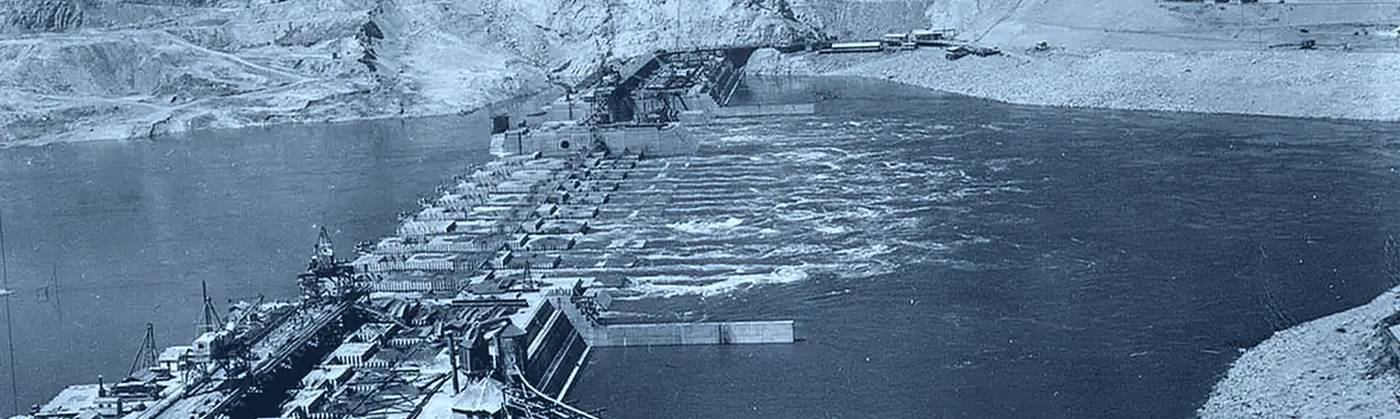
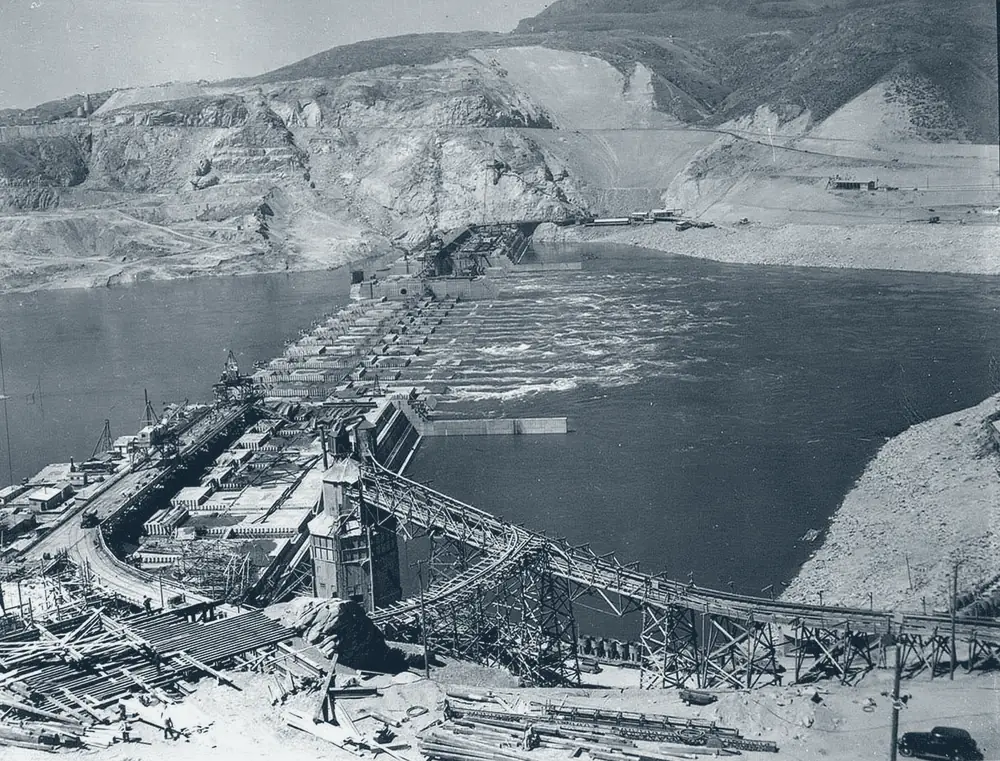
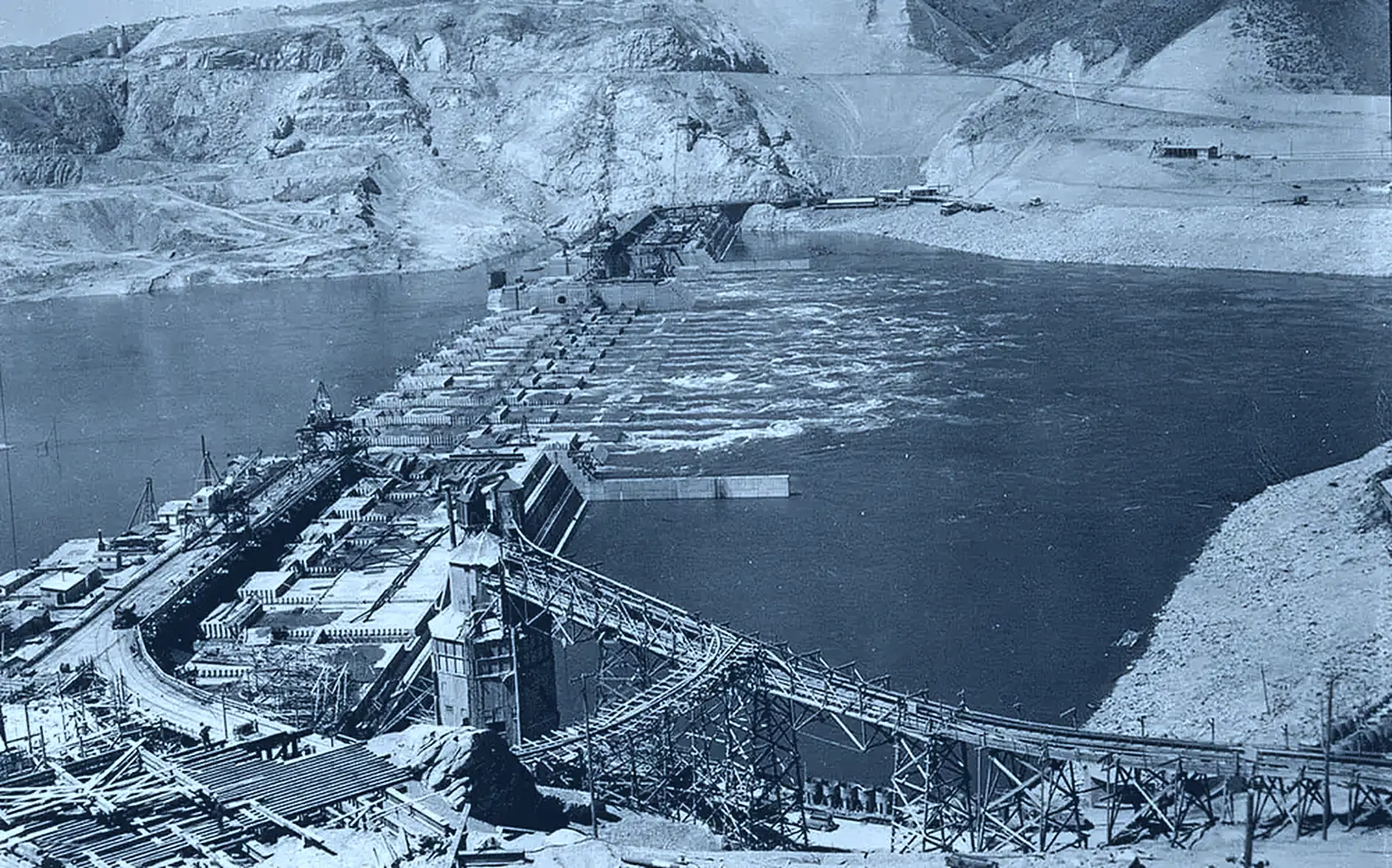
Grand Coulee under construction, 1936 · U.S. Bureau of Reclamation
A 501(c)(4) civic organization of the Intermountain West

We stay with it
until it stands.

The Intermountain West runs on things somebody has to keep — rivers and forests, canals and wires, mills and districts and the habit of governing yourself. Voices stewards big things, in public.

I Platform

The platform — the positions Voices holds

What we are for

The freedom to work your ground and the health of the country around it are won together.

The systems everything else depends on — watersheds and forests, energy and irrigation, land use and development, and the civic capacity to govern any of it — are visibly failing, and the instruments that exist for doing something about them no longer deliver. The gift is made, the association joined, the campaign funded, the board seat taken, and the needle does not move.

Underneath it is one conflict, not many: each party protecting its own stake and independence, the community needing shared systems that actually work, and, holding the two apart, a settled resignation that nothing can really be done — so the sane move is to look after your own. That is the core conflict of the Intermountain West. What follows is what this body holds against it.

I

The wild, kept by a people who know it

Headwaters to tidewater · Forest and fire · Fish and wildlife

The wild is kept by the people whose lives run through it — who read the snowpack because their season depends on it, who know the stand because they cut and planted it, who know the river because they fish it. Stewardship is a practice before it is a designation, and policy for the wild succeeds by enlarging that practice.

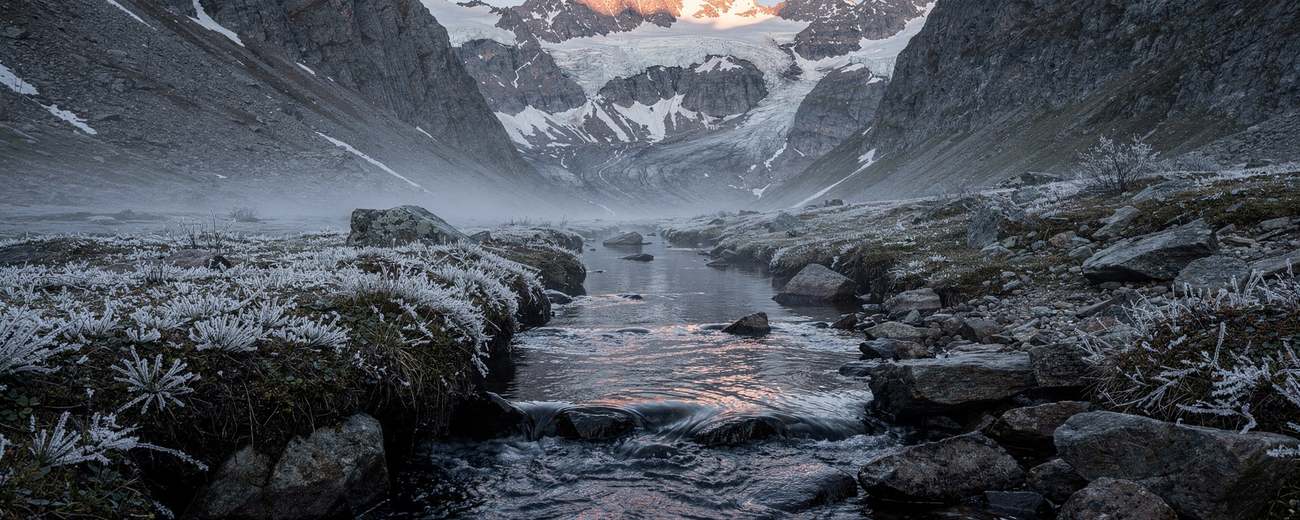
A headwater stream at first light, alpenglow on the peaks.PLATE 01
01
Headwaters to tidewater

One water, one ledger.

Snowpack, aquifer, reservoir, river and estuary are a single system, and we account them on the same books — supply and storage, quality and flow, and the energy carried in water's elevation, together. The region's true reservoir is the snowpack, and it is shrinking as storage; its aquifers were drawn down as bridges that time made permanent; its surface storage holds energy value the books have never counted. Water managed venue by venue — a rate case here, an adjudication there, a cleanup program at the far end — is water managed against itself.

The test is the whole ledger. Any proposal that touches water answers for the entire system it moves through: what it does to the aquifer beneath, the reservoir behind, the reach below, and the estuary at the end. The waters we send to tidewater arrive as clean as the argument we make for them.
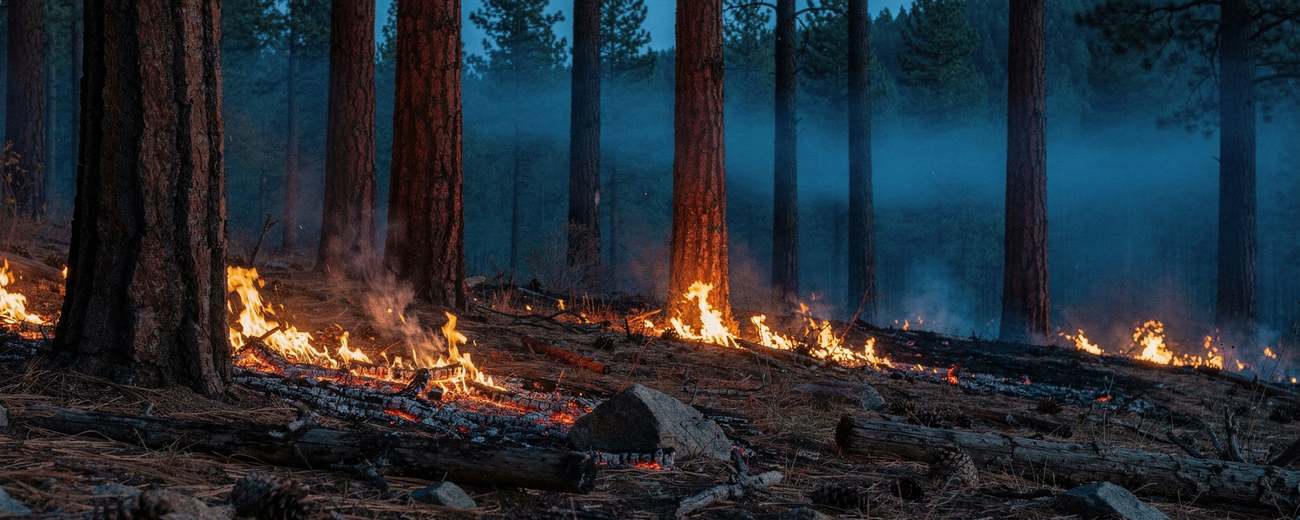
Low prescribed fire creeping through pine understory at blue dusk.PLATE 02
02
Forest and fire

Fire is a condition of the forest.

A century of exclusion and a generation of declining harvest loaded the stands, and fire behavior follows stand condition as surely as runoff follows the hydrograph. The forest above the diversion sets the water below it: fuel load and stream flow are one problem, however many agencies it wears.

Manage the stand and you manage the fire. Treat density and fuels at watershed scale, on schedules set by the condition of the land. Carry post-fire recovery at the speed the burned ground requires. And the cost of fire belongs where it originates, on the condition of the land — the ratepayer's bill is for power.

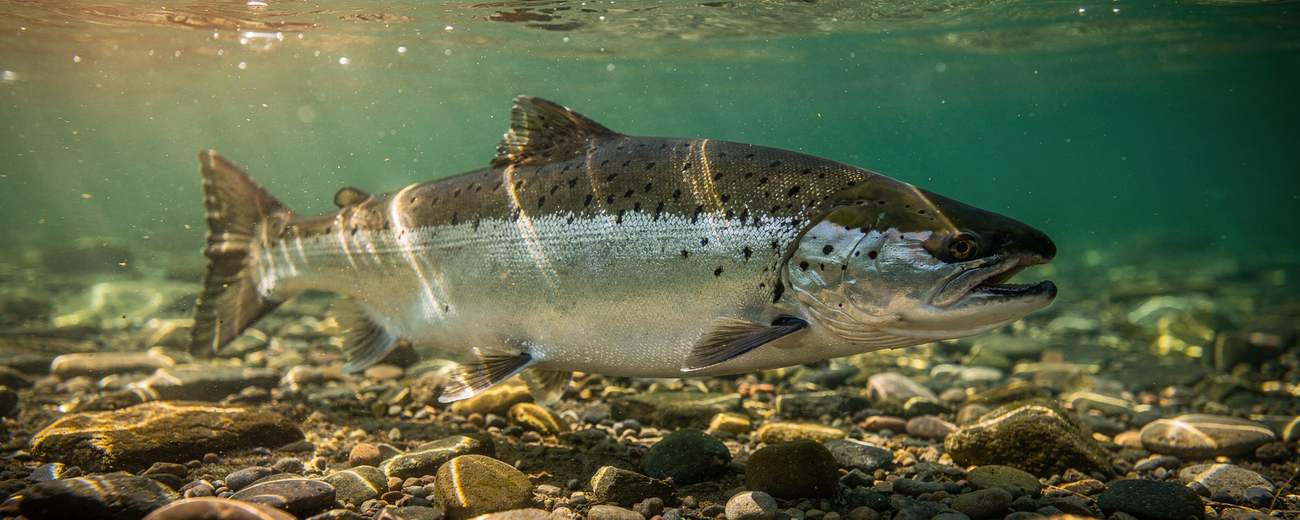
A wild Chinook salmon holding over clean gravel in low last sun.PLATE 03
03
Fish and wildlife

Recovery is led from the river.

A generation of recovery run through the courts has rationed farms, barging and power while the returns stay contested — the same fight renewed every year while the fish wait on the docket. The recoveries that hold are done in the water instead: spawning habitat rebuilt reach by reach, tributaries opened and screened, hatcheries run to purpose, predation and harvest managed honestly, and fish carried back above the old blockages by the people of the river themselves, as the upper river's own effort is now proving. That work earns a peace litigation never has, and it is done by people whose living the same river carries.

The same principle carries to the uplands. Big game, sage grouse and the connectivity between them are habitat questions, and habitat is built by the landowners, sportsmen and range managers who hold the ground.

II

Freedom to build is freedom to steward

Working lands · Timber and minerals · Energy

The steward and the operator are the same person. The farm, the mill, the mine and the generator are how the landscape is held — by someone with a reason to hold it well.

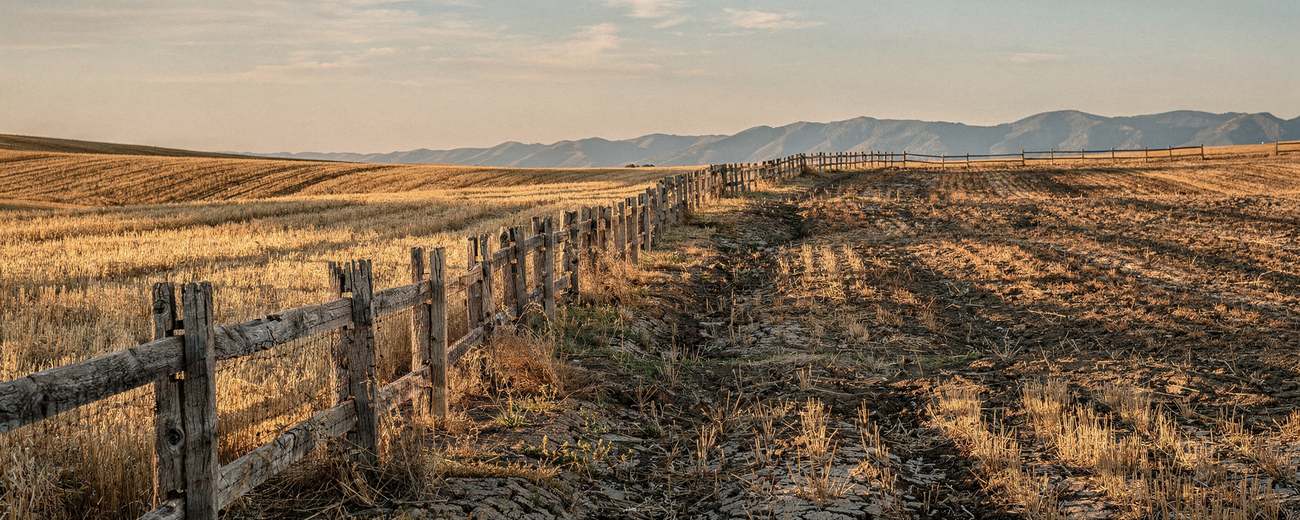
Wheat stubble and a cedar fence line in muted last light.PLATE 04
04
Working lands

Set the outcome, and leave the practice to the operator.

The water quality, the soil, the habitat measure: say what has to be achieved, then let the person carrying the risk find the way there. Operators improve on outcome standards, because their ground is their capital; a practice written into rule is frozen at the moment of its drafting.

Certainty in water rights and land tenure is the precondition of every investment stewardship requires — sure of the right, the operator builds; and a rule that can make a felon of a paperwork error is survived, at best.

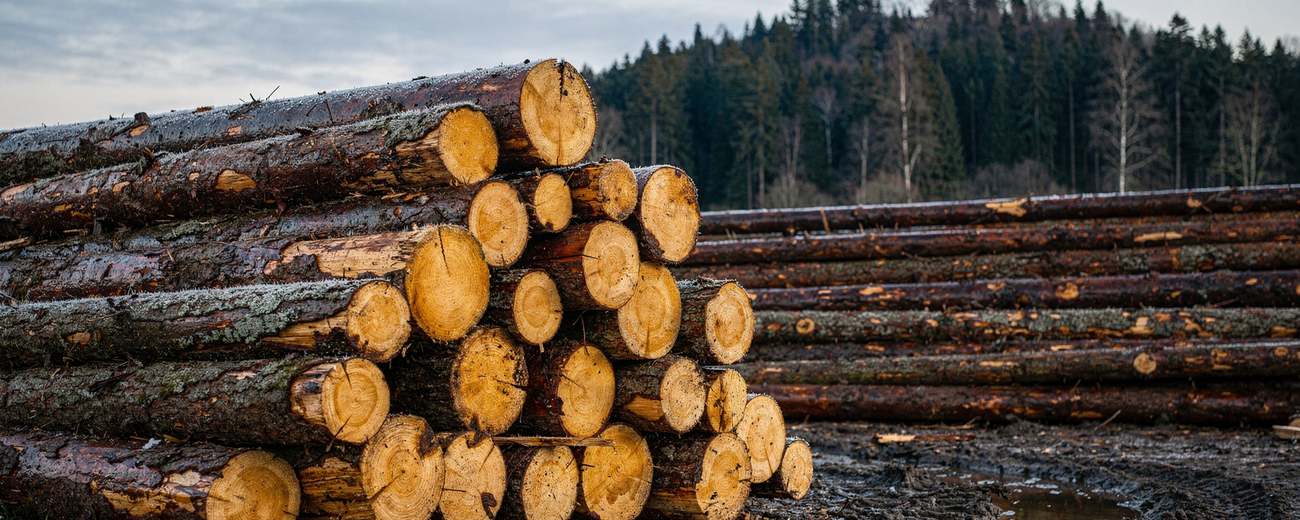
Decked sawlogs at a forest landing at first light.PLATE 05
05
Timber and minerals

A standing mill is forest policy.

The region's materials — cut, mined and recovered — are one supply, and the capacity to work them close to the ground is what makes stewardship affordable. Restoration runs on harvest economics: the mill pays for the thinning, and the mill radius is the treatment radius. What the mill is to the forest, the processor is to the ore. The build-out ahead is made of materials sought on ground people already hold dear, and the region that hosts the extraction should host the processing and the recovery, counted as supply alongside the ore.

Extraction earns its ground by how it leaves it — reclamation is the standard that earns the next permit, and the operator who meets it should find the permit faster for having met it. The forest health the first commitment requires is purchased here, in the second.

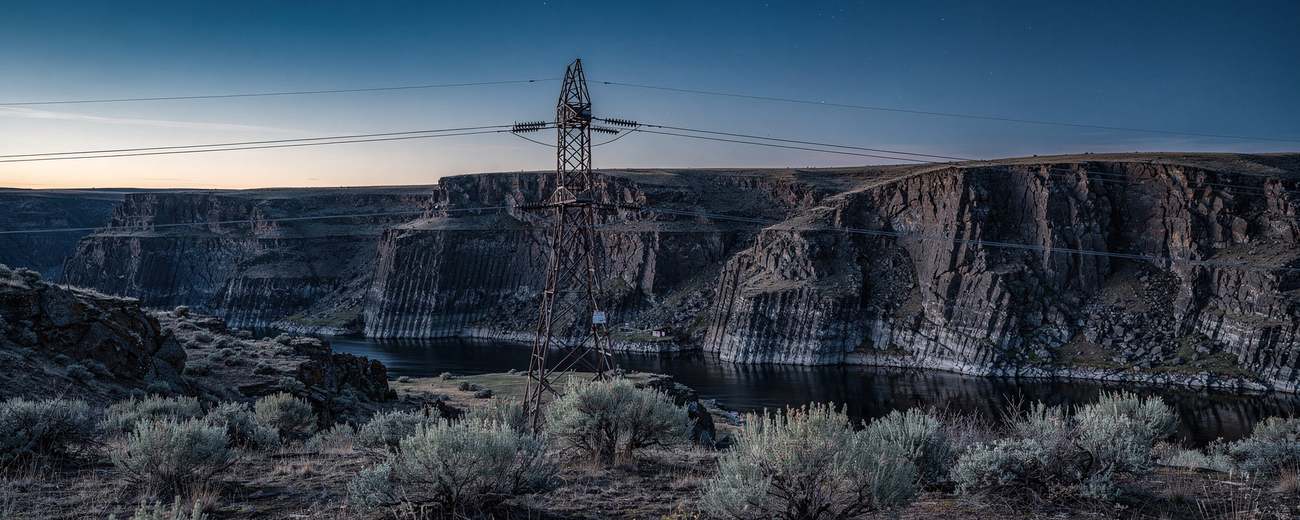
A transmission tower crossing a basalt river canyon at deep dusk.PLATE 06
06
Energy

Energy is a yield of the working landscape.

Generation belongs with the working lands — on their structures, along their alignments, in their margins — designed with agriculture, so that the acre yields twice and the operator is a partner from the first drawing. The existing hydropower system is the region's inheritance and its cheapest new capacity: optimized, modernized, and counted at its full value before a single greenfield is claimed.

And the bill lands where the value lands. Rural ratepayers carry no more than the value they receive; every other cost travels home to the policy, the land, or the load that caused it. Large new demand is welcome on one condition met in full: it brings its own supply and pays for the capacity it takes.

III

What we share, we finish

Water, power and lines · Roads, rail and fiber · Main street and settlement

The region is full of systems the nation started and set down half-built — canals authorized and never dug, corridors planned and never wired, towns settled on promises that stopped at the survey stake. Finishing is cheaper than starting, and more honest than abandoning. Priced correctly, the demand arriving in the West right now — for power, for capacity, for ground — is the means of finishing it.

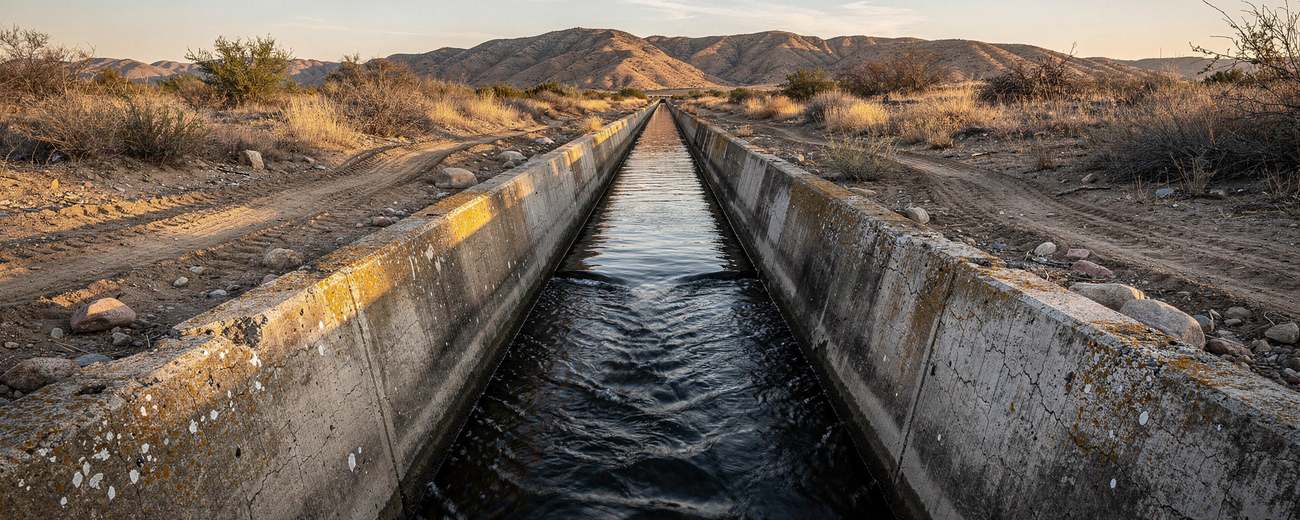
An irrigation canal running full toward dry foothills at last sun.PLATE 07
07
Water, power and lines

Water conveyance is energy storage.

Water held at elevation is charged energy; the reservoirs and canals built to irrigate are also the grid's balance sheet, storing surplus when power is cheap and returning it firm when it is scarce. Storage, generation and transmission are planned as one asset, and the system already half-built is the first place the West looks before it builds new.

The Columbia Basin Project is the standing case. The nation authorized a million acres in 1943, built two-thirds of the system, and left the third canal on paper — 330,000 authorized acres waiting above a failing aquifer for eighty years. The value that finishes it is already inside it: the storage the system holds, counted at last as the energy it is, priced to the demand that needs it, with the premium building the canal. Completion asks no new appropriation. It asks that what was authorized be finished by the wealth the system already stores — and every half-built system in the West is a candidate for the same accounting.

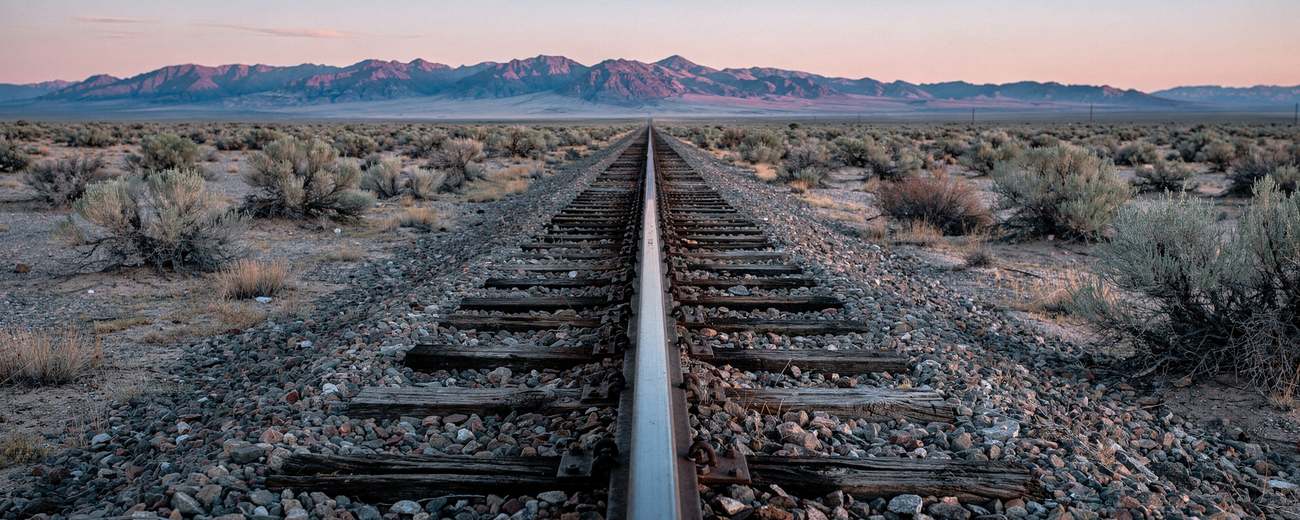
A single rail line through sagebrush basin at dawn.PLATE 08
08
Roads, rail and fiber

Freight cost is a farm cost.

The region's goods move on the mode that fits the distance — short-line rail, river barge and highway run as one system — and its signal moves on fiber built to the same standard at the last mile as the first, because everything now runs on it: the farm's markets, the clinic's records, the school's classroom, the town's chance to keep its children.

Preserve the short lines before they are torn out, maintain the river system that moves a train's load on a fraction of the fuel, build the intermodal points where the modes hand off — and where the market will not carry the trunk, the region's ports and public bodies build it and lease it open, a model this region has already proven and now needs at scale. Connection is infrastructure now, and the wire and the rail are the same promise: distance stops deciding who gets to compete.

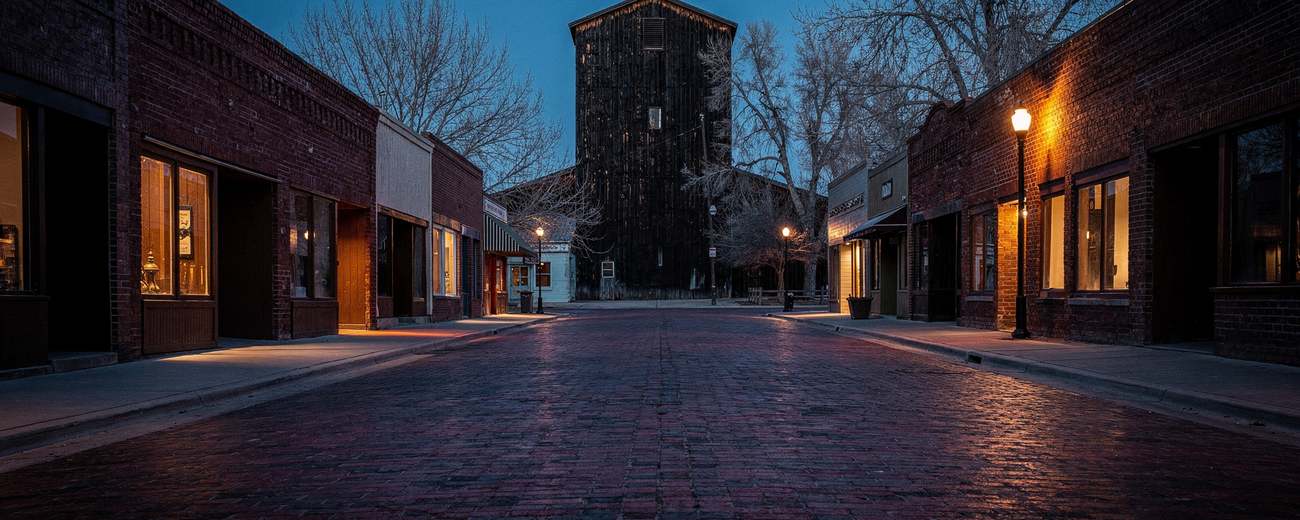
A brick main street at dusk, a grain elevator closing its end.PLATE 09
09
Main street and settlement

Build where the systems already reach.

Housing cost is an infrastructure problem before it is a housing problem: served ground is buildable ground, and the region's towns have water, power and road already run to lots that only regulation holds empty. Settlement follows the systems — infill first, the spine extended next — or it pays honestly to extend them.

And because the region hosts the works — the dams, the lines, the corridors, the campuses — the tax base, jobs and civic investment those works generate belong first to the towns that carry them. What the region builds should show on its main streets — in the school bond that passes, the hospital wing that opens, the storefront that lights. That return is what makes a host a partner.

IV

Tradition renews in the wild

Self-government · Conservation and recreation · Teaching and succession

Tradition in this region is the first chair on a powder morning and the first cast of opening day; the elk camp pitched where the grandfather pitched it; the derby weigh-in, the branding, the ribbon at the county fair. It is one of the region's great economies — the ski hills and marinas, the outfitters and guides, the fly shops and bird festivals that turn the keeping of the country into a living. And it is the region's true school, because nobody ever learned a river from a book. The fourth commitment is the handing-forward, and it renews where the handing has always happened: in the field, in season, in company.

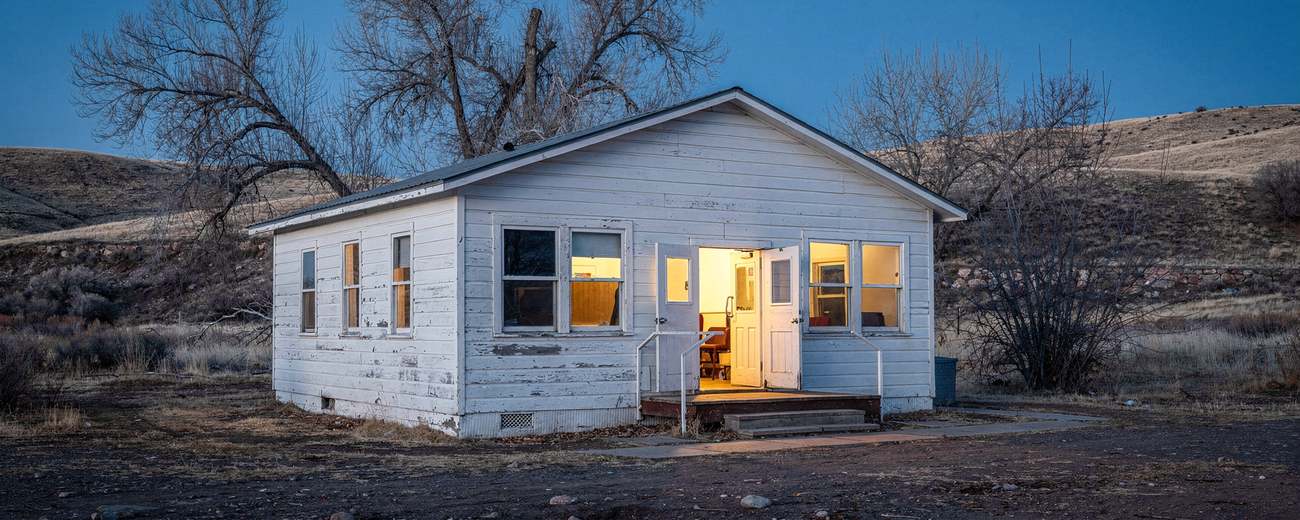
A clapboard community hall at dusk, doors open to warm light.PLATE 10
10
Self-government

The body that holds the asset should answer for it.

This is the American experiment, still running. The region's quiet governments — irrigation and conservation districts, ditch companies, school and fair and hospital boards, compacts, commissions, land and water trusts — are self-government in its original form: neighbors elected at a grange-hall annual meeting, taxing themselves for an asset they can see, delivering every spring.

And it governs well when its reach matches its asset: a watershed crossed by six jurisdictions needs one table, and where systems cross sovereignties, standing arrangements between the governments that hold them — durable, mutual, built to outlast the signers. Strengthen these bodies' authority, their revenue and their bench — because when they hollow out, the asset follows, and the habit of self-government follows the asset.

A pack trail climbing an open hillside in last amber sun.PLATE 11
11
Conservation and recreation

A country is kept by the people who use it.

Public land stays open. Manage it for use, secure easements and river access, and carry hunting and fishing forward as both management tools and inheritance. The people on the trail, the river and the ridgeline are the conservation constituency, and closure teaches only absence. Around that practice stands a working economy the size of any in the region, and a membership layer that does the work no agency reaches: the duck club floods the marsh the flyway depends on; the rod club rebuilds the spawning channel; the trail association clears a hundred miles by hand; the ski patrol trains its candidates on the hill it keeps safe; the birding festival fills the motels the week the cranes come through.

Membership is where stewardship is practiced — obligation chosen, dues paid, the work done in company — and it is worth defending: from the drift that turns working bodies into advocacy shops, from the liability and permitting burdens that price volunteers out of the field, and for its seat as co-author of the decisions its members will carry out by hand. A region is conserved by its members.

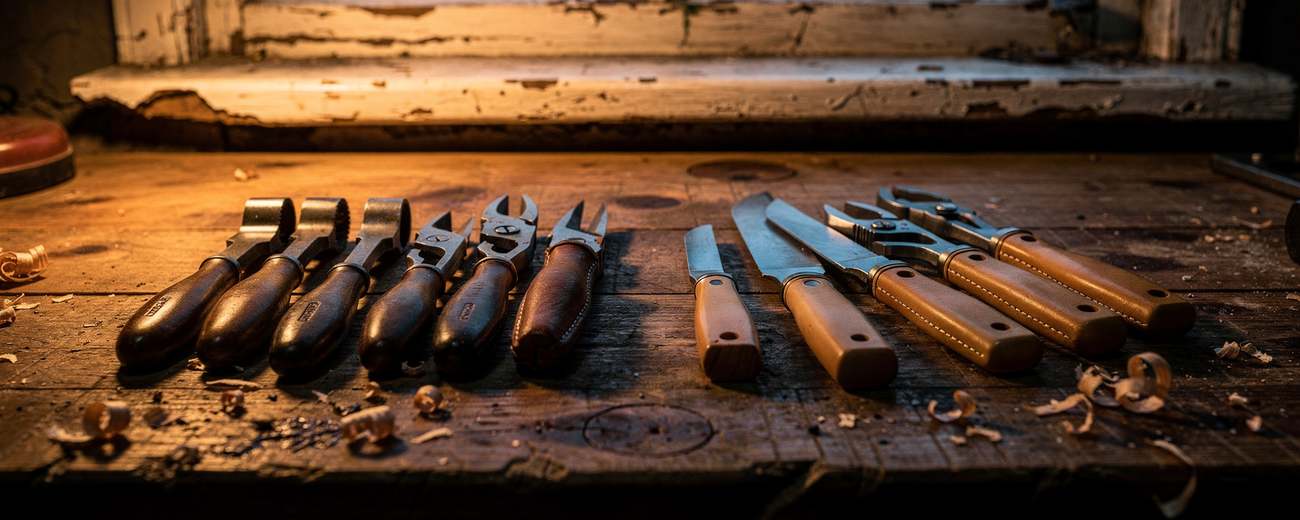
Two generations of hand tools on a workbench at dusk.PLATE 12
12
Teaching and succession

Every institution is one turnover from losing what it knows.

The ditch rider who can hear a headgate going wrong before the gauge shows it; the forester who reads a stand at windshield speed; the district manager who carries a water right's whole history in her head — this knowledge is alive. It rides in the truck at daylight, wades the river, walks the burn.

And it is handed forward the way it has always been handed: a kid on the tailgate learning the rotation, a first deer dressed under an uncle's eye, a candidate season on patrol, a 4-H barn, an FFA chapter, two years in the passenger seat before the retirement. Put succession inside every standing body before the vacancy announces it, and put the classroom on the ground it describes. The region that teaches its keeping keeps; the one that assumes it will be remembered is already forgetting.

II Method
How the work is done

Every stuck thing holds two legitimate needs in tension.

A canal that was never dug, a bill that dies every session, a permit six years into review — the block is almost never engineering or money. Two parties each need something real, every road open to them makes one need cost the other, and everyone has settled into the trade. Nobody in that arrangement is wrong. That is what makes it hold.

Our work is to state both needs precisely enough that a third way becomes visible, then carry that way through the offices, sessions and seasons it takes to build. One case at a time.

The Civic Cycle

A person discerns, a community deliberates, a society proves, a culture remembers.

One person carries an idea far enough to make it a project. A community takes the project up and makes it an enterprise; a society, an institution; a culture, a tradition — and tradition is the ground the next idea rises from. Every turn is an elevation. Wider ground, and something handed up at each one.

Those four turns have names — vision, development, integration, renewal — and each runs on three kinds of work done by people who can be named: twelve functions, every one of them somebody's actual job. A case takes up the ones its ground requires and enters wherever it actually stands; a stuck project is stuck at a particular elevation, and the work starts there. Each of the four seats its own table once a year, placed by role and by invitation, and between the tables the case work never stops.

The Civic Cycle, told in full.
01

Vision

Individual · an idea becomes a project

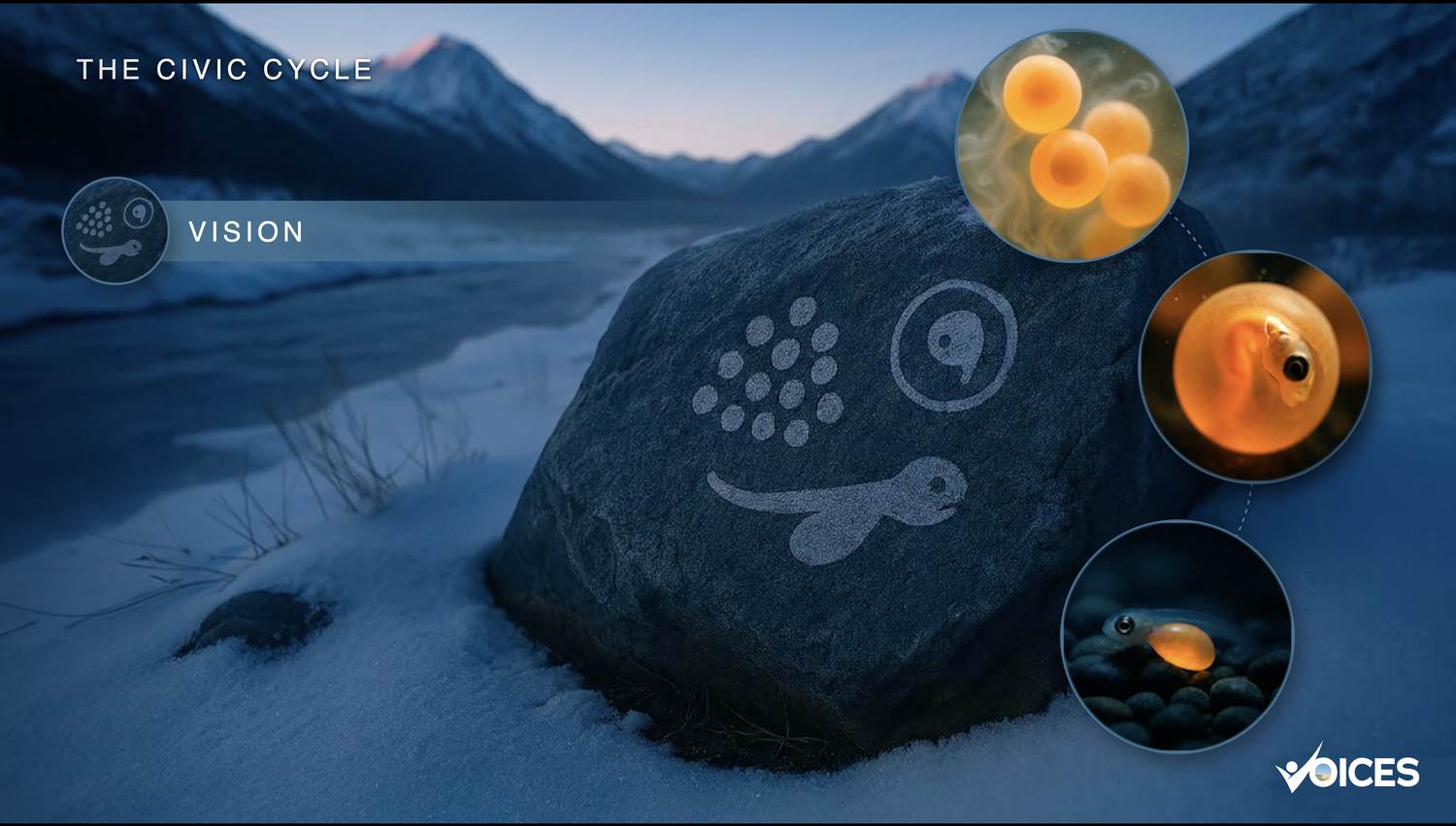
Someone sees the thing that should exist — usually somebody already working the ground it would sit on — and starts saying it out loud before anyone has reason to listen. The work of this phase is to find that person, put a design under the idea so it can survive contact with the ground, and find the means to begin. It ends when the idea has a drawing, a number and somebody willing to sign.

From the Civic Cycle film — Vision: salmon eggs glowing in winter water below snow-covered peaks at dusk.
Convenes · Spring · Water

Headwaters Council

The year opens at the sources — snowpack, rivers, fish — because everything below is decided by what fell in the mountains. The table hears what people are already carrying, scans the region for what has stopped, and chooses which of it this body will take up for the year. What leaves the room is a short list with a name against each line.

The seats — placed by role, by invitation
ChampionsDiscern the idea, and carry it before anyone else will.
ExpertsShape the design, so the idea can survive contact with the ground.
BackersResource the project, at the scale the work actually needs.
Held · Spring 2026 · Capitol Hill

A rowhouse table three blocks from the Capitol. Seated by invitation, held closed, and reported to the seats rather than the page.

Proceedings to the seats
02

Development

Community · a project becomes an enterprise

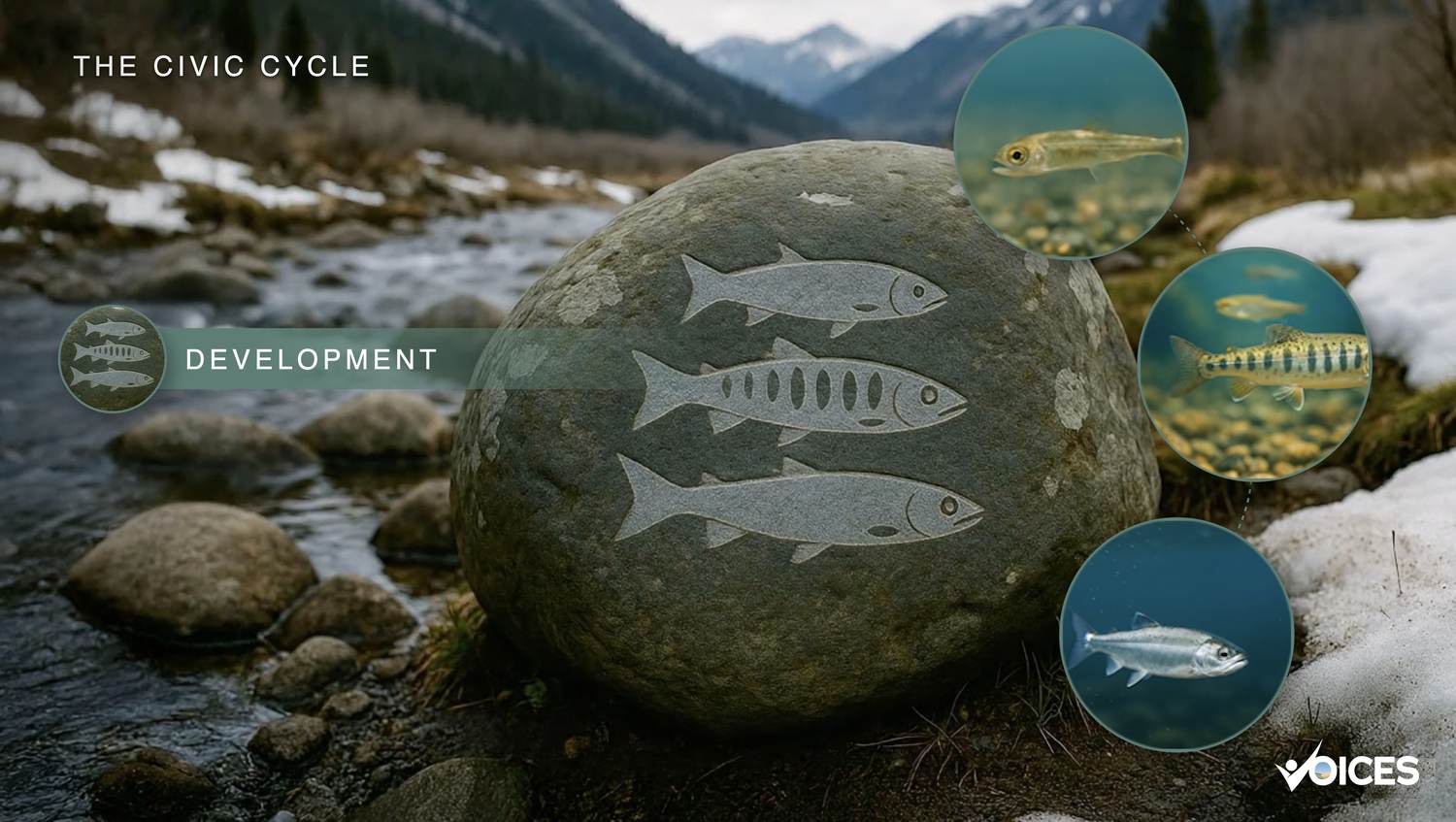
The project earns the standing to proceed. Consent is gathered where it is owed — from the neighbors, the districts, and the governments whose ground and water it touches — then argued in the open until the region knows what is being asked, and written into an authorization with somebody's name on it. Most good projects die in this phase, and they die quietly, because nobody would spend standing on them early.

From the Civic Cycle film — Development: young salmon beside a snowmelt stream, fry to smolt.
Convenes · Summer · Working lands

Cascade Assembly

Agriculture and energy, seated at the same table, because the region's oldest fights run between them and most of the new ones do too. This is where a project is argued in front of the people it will actually land on — growers, districts, utilities, the county — and where an endorsement is worth carrying because it was hard to get.

The seats — placed by role, by invitation
EldersEndorse the proposal, on behalf of what came before it.
AdvocatesPromote the cause, until the region knows what is being asked.
OfficialsAuthorize the approval, in the venue that actually holds it.
Held · Summer 2026 · Edmonton, Alberta

Carried at the 35th Annual Summit of the Pacific NorthWest Economic Region, 19–23 July, where Mary Dye spoke among delegates from ten states, provinces and territories. PNWER has convened this region across the border for thirty-five years, and its Legislative Energy Horizon Institute is where Mary studied the continental grid.

Pacific NorthWest Economic Region
03

Integration

Society · an enterprise becomes an institution

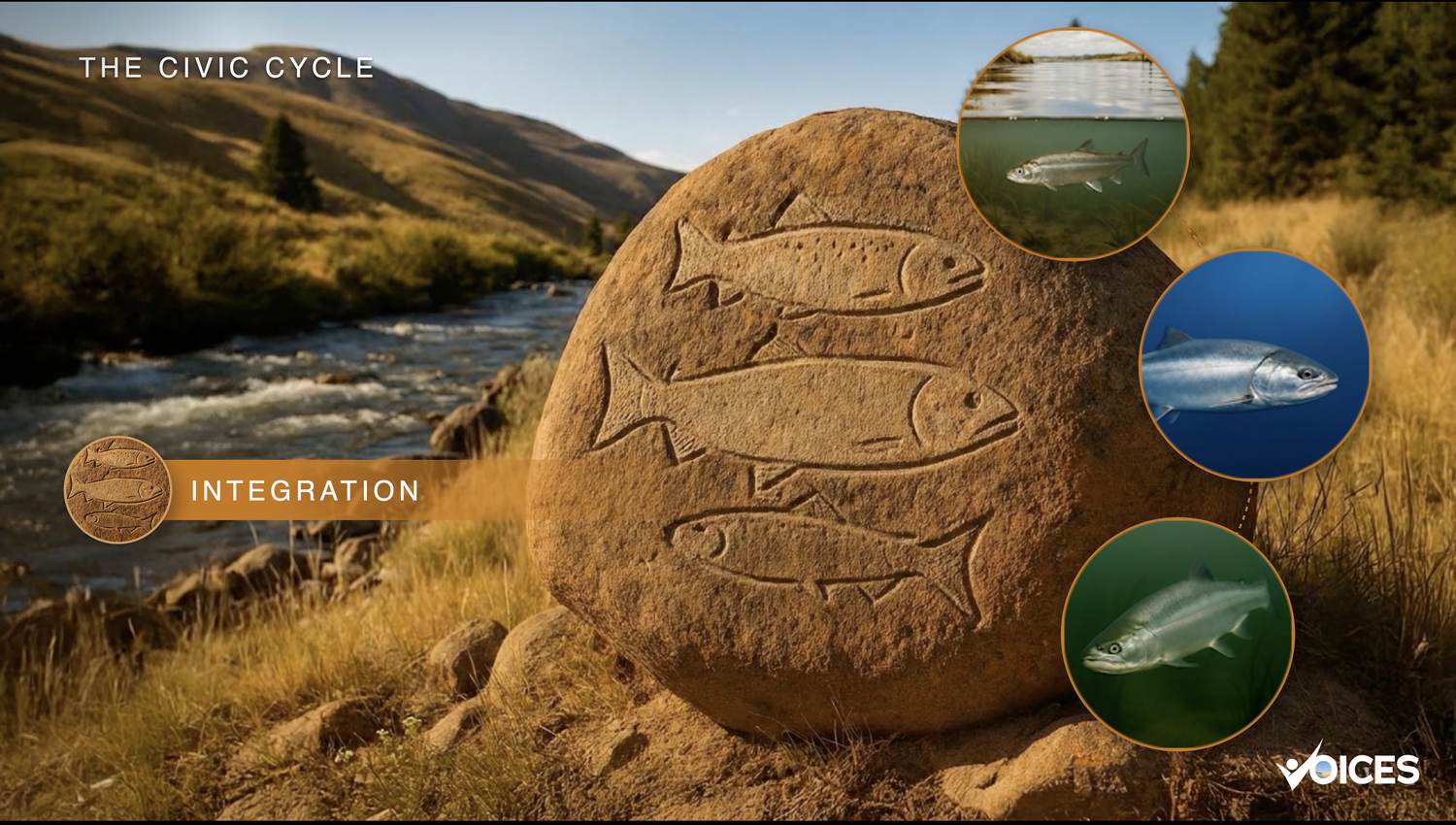
The work gets built, and then it gets kept running. Permits and easements, contracts and crews, a budget line carried session after session, the first delivery and then the second. This is where most of the years go and where most bodies leave — which is why a case is read again here at five years and at ten, against what was promised.

From the Civic Cycle film — Integration: adult salmon at sea, carved stone beside a summer river.
Convenes · Autumn · Built systems

Confluence Table

Where the waters and the work meet: the built systems — canals and dams, lines, rail and fiber — and the people who run them and pay for them. The table reads what was actually built this year against what was promised, reach by reach and line by line, and settles what the next year owes. The Columbia Basin Project is the case read here.

The seats — placed by role, by invitation
AdministratorsFacilitate the construction, through the offices that hold it.
ProducersDeliver the results, on the ground, at the promised scale.
PartnersSeed the next potential, so the standing work compounds.
Next · Autumn 2026 · Spokane, Washington

Seated at Gonzaga University School of Law, on the bank of the Spokane River. The cases carried into autumn are taken up here.

Proceedings to the seats
04

Renewal

Culture · an institution becomes a tradition

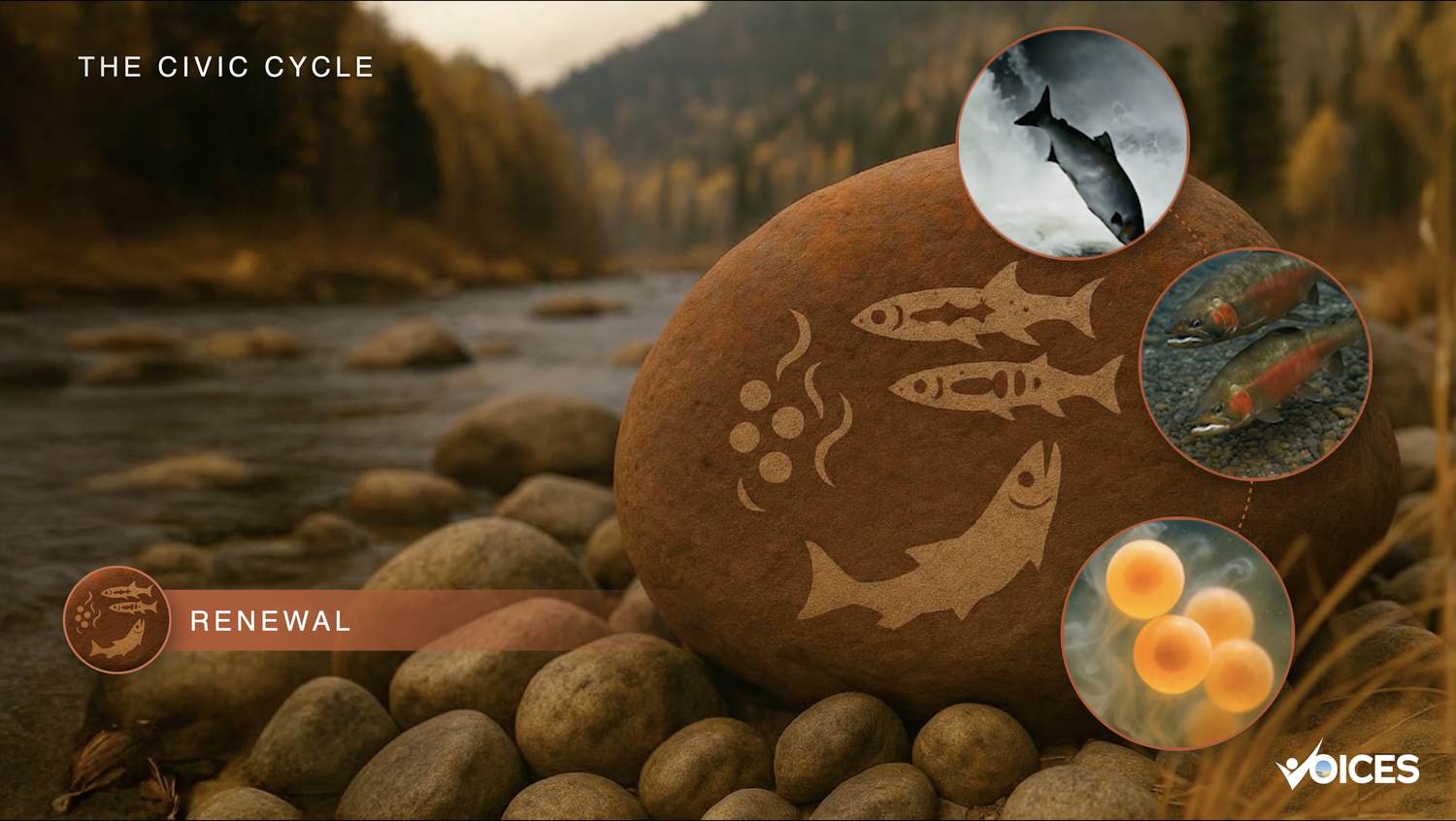
A proof decays if nobody re-wins it. The people who built a thing know why every decision inside it was made; the ones who inherit it get the thing and not the reasons, and begin trading them away without knowing the price. Renewal hands the reasons forward with the asset — in the telling, in the apprenticeship, in the season spent riding along — so the next turnover inherits both.

From the Civic Cycle film — Renewal: spawning salmon returned to the autumn river, eggs laid in the gravel.
Convenes · Winter · Civic capacity

Tides Retreat

The year closes on the keeping itself: what held, what was lost, who came in, and who is leaving with something nobody else knows. It is the least transactional of the four tables by design — the record is told here rather than negotiated — and the people who will carry the work next are in the room with the people who have been carrying it.

The seats — placed by role, by invitation
StorytellersIngrain the experience, so the region remembers what it did.
MentorsTransfer the knowledge, before the person holding it leaves.
MastersCelebrate the tradition, and make it worth joining.
Winter · Not yet set

Placed when the year turns.

III Cases
What we carry

Every case is a promise somebody can check.

A case is one specific thing this body takes up in public: a public work that stopped, a bill, an approval, a settlement, a project that needs somebody behind it. Each sits under the position it tests. We read each again at five years and at ten, and nothing leaves the list.

Anywhere in the Intermountain West is in scope, and anyone stewarding something here can be seated. A case is taken up one at a time, because that is the only pace at which anything gets finished.

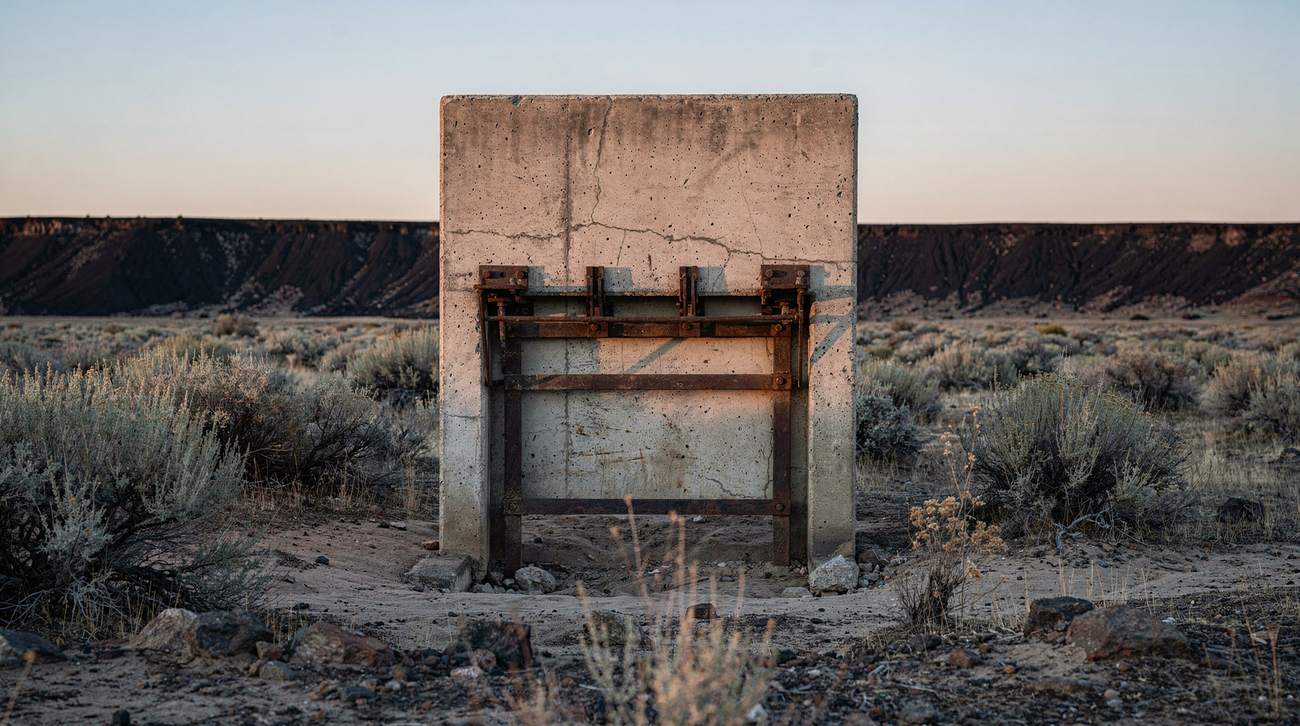
A standing concrete canal headgate alone in sagebrush steppe at first light, no channel dug beyond it.
Grand Coulee Dam under construction, 1936. Live Columbia Basin Project The East High Canal and its 330,000 acres, authorized in 1943 and never dug, above an aquifer that has been standing in for the water ever since. Authorized1943Columbia Basin Project Act — 1,029,000 acres, three canals BuiltTwo of threeAbout 670,000 acres watered; the East High left on paper Waiting on it330,000 acresCarried since on deep wells into a failing aquifer Committed to date$237M+State, federal, USDA and landowner bonds, reach by reach Open the caseClose the case
Live

Two of three canals were built.

Under the Columbia Basin Project Act of 1943 the nation set out to water just over a million acres of eastern Washington — 1,029,000 — with three canals off the Columbia, and to pay for the whole system by selling Grand Coulee's electricity. Grand Coulee was built to power it.

Two of the three canals were built. Grand Coulee, Banks Lake, and the West and East Low canals water about 670,000 acres today, roughly two-thirds of the plan. The third canal, the East High, was never built. Its 330,000 acres in the Odessa country remain authorized and classified irrigable, and they have waited for water ever since.

The power revenue meant to build it was long ago committed to other obligations. That is why finishing has always meant finding the money, and why every completion effort since has asked the federal power system for money it no longer has.

West & East Low canals — built 670,000 acres watering now EL 47.5 Complete 2021 EL 86.4 Complete 2025 EL 22.1 Funded · building East High Canal — never dug 330,000 acres · 1.1 million acre-feet · authorized 1943
Solid where the water runs; dashed where it was authorized and never built. Delivery systems as reported in the public record.
What the waiting cost

Deep wells were the bridge, and the aquifer is failing.

Those farms did not wait idle. They drilled deep wells into the Odessa aquifer to bridge the years until the canal came — and the aquifer is now failing. Wells deepen. Some have died. Every foot the water table drops is a well deepened, a pump replaced, or a farm ended, and the towns draw from the same aquifer the farms do.

Washington's Department of Ecology estimates that letting it fail would cost the region 3,600 jobs and $211 million a year in regional income. The canal is what averts that.

ground 1980 2000 today drilled deepened deepened again
Section through the Odessa subarea. Each well follows the water table down until the lift stops paying — or the well dies.
Appropriated, and building

$237 million and counting, reach by reach.

The Odessa Groundwater Replacement Program moves the Basin's deep-well farms onto the Project's surface water, reach by reach — the Project doing, piece by piece, what it was authorized to do. It advances only when a capital budget carries it, which is why it has to be carried session after session by people who are already in the room.

2004 –
Washington State capital budgets, cumulativeProgram-wide — canal capacity, laterals, delivery systems
$126M+
2004 –
U.S. Bureau of ReclamationProgram-wide federal share
$45M+
2022 –
USDA — Natural Resources Conservation ServiceWatershed-plan commitments
$49.4M
ECBID landowner-funded municipal bondsDelivery facilities
$16.8M
Total
Committed to date
$237M+
Complete · 2021

EL 47.5

The first delivery system built under the program.

Complete · 2025

EL 86.4

5,426 acres converted and 16 wells retired — 5.3 billion gallons left in the aquifer each year.

Funded · building

EL 22.1

34 wells moved to surface water across 17,000+ acres — twelve miles of pipeline and a canal-scale pump station.

The law moves with the money. House Bill 1752, carried from the basin and passed both chambers in 2024 without a dissenting vote, lets Reclamation modify the Project's water rights so that conserved water serves more acres — the statute the replacement reaches run on.

Why it stopped

The numbers of that moment said no.

The last time the question was studied, the answer was the smaller fix. In 2012 Reclamation completed the Odessa Subarea Special Study, an environmental review of how to rescue the failing aquifer with project water. It weighed a partial East High build — a canal from above Billy Clapp Lake to east of Moses Lake, replacing groundwater acre-for-acre on about 102,600 already-irrigated acres, no new land — against a narrower swap through an enlarged East Low Canal.

It chose the swap. The East High's first reach was analyzed and left unbuilt, and the full 330,000-acre build has never had a modern record at all. Economics made the call: on the numbers of that moment, the full build's benefits did not cover its costs.

The record is still open. Its hydrology, soils and surveys carry forward. The water has not changed — what it is worth has.

What changed

The price of power changed the answer.

Data centers, and the artificial intelligence they run, chase two things they cannot make: firm, carbon-free electricity and the water that stores it. This region holds both — along with canals, lines and last miles the nation left half-built eighty years ago.

Priced right, that demand finishes the work. Power contracts can dig the last canal, water 330,000 authorized acres, let the aquifer refill, and land the return on the main streets that host the works. Priced wrong, gray boxes cover farmland and the value leaves the county at the speed of light.

What was started

What it looked like when the country was building.

Grand Coulee Dam under construction in 1936: cofferdams, trestles and conveyor works spanning the Columbia between excavated abutments.
Plate I
1936
Grand Coulee under construction — built to power the project that would water the acres.
U.S. Bureau of Reclamation. A work of the United States government, in the public domain.
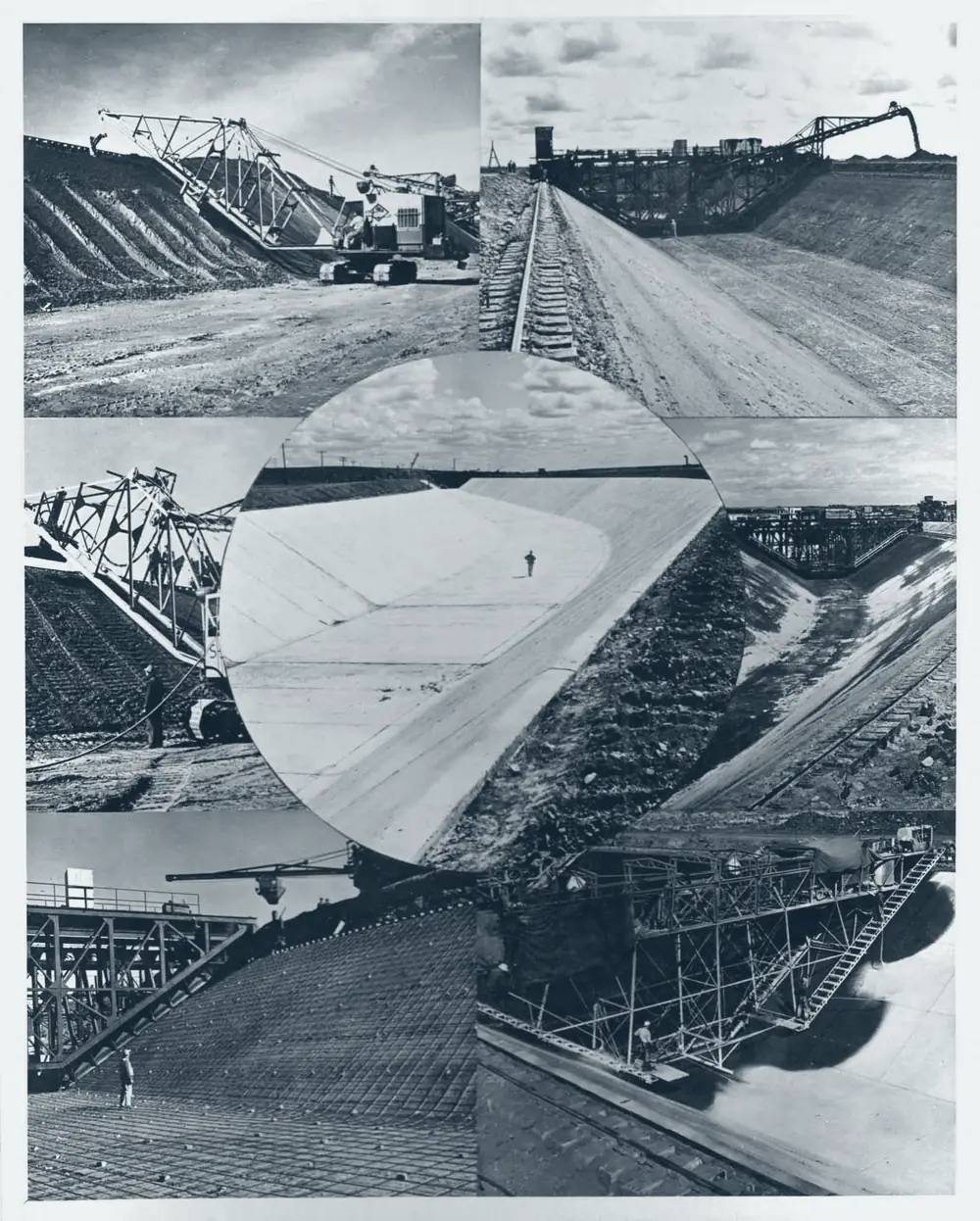
Columbia Basin Project canal construction: draglines cutting the prism, a lined reach running to the horizon, trestles and conveyors working over the grade.
Plate II
1940s
Cutting and lining the canal prism — the two canals that were built, dug by dragline and finished by hand.
U.S. Bureau of Reclamation. A work of the United States government, in the public domain.
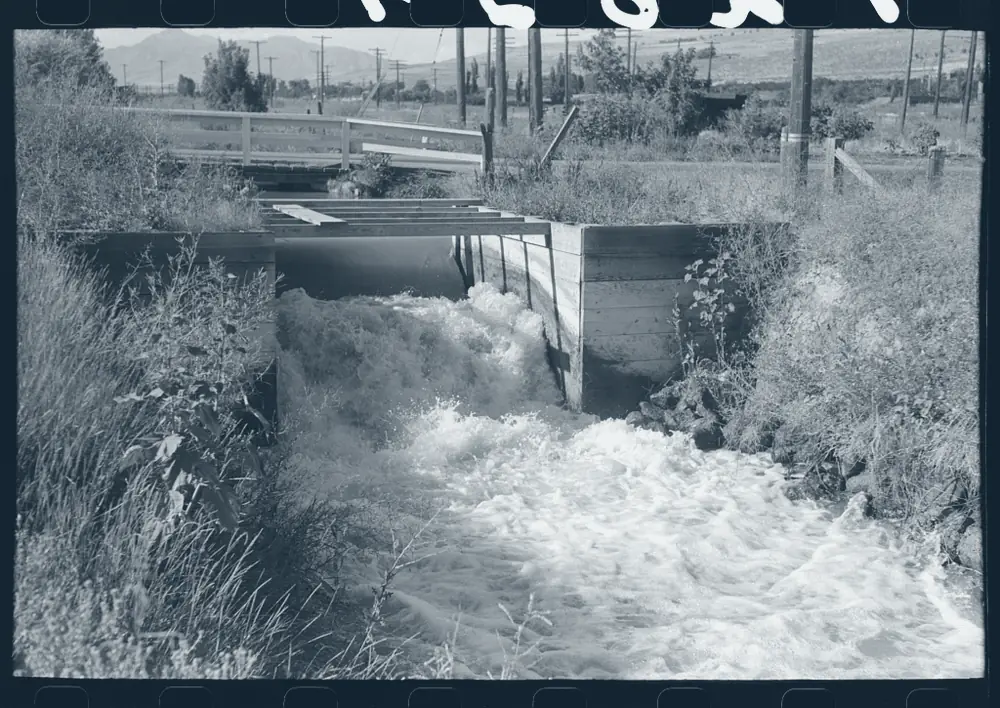
Irrigation water surging through a wooden farm check structure into a field ditch, 1940.
Plate III
1940
Water, delivered — what the whole apparatus is for, at the only scale that counts.
Russell Lee for the Farm Security Administration. Library of Congress; public domain.
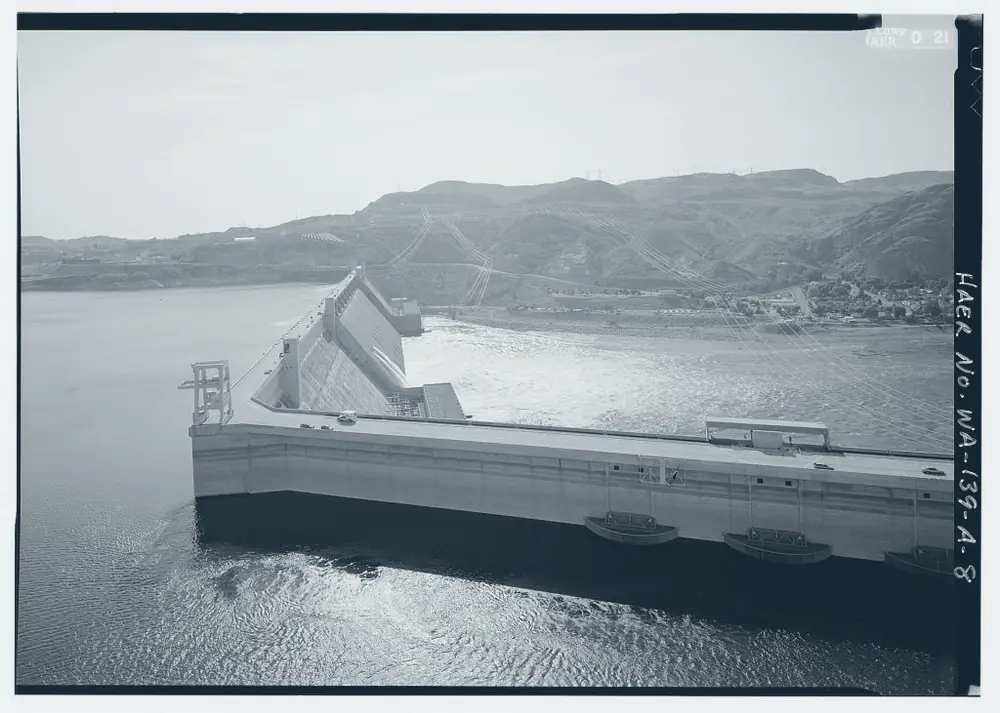
Grand Coulee Dam and forebay from above, large-format survey photograph, 1996.
Plate IV
1996
The standing work, sixty years on. The third canal is still not there.
Library of Congress, HAER WA-139-A-8; photograph by Jet Lowe.
What we are asking for

Finish it on the value the system already holds.

This is the test the whole platform runs on: the operator's freedom and the system's health, protected by the same move. Surface water on the land ends the rationing the farms have been living under, and it lets the aquifer recover under the towns that drink from it. Nothing here asks for a new federal appropriation.

01 Carry the Odessa record to the reach it already measured. The 2012 study measured that reach and left it unbuilt. Re-price it on the record that still stands; the hydrology and surveys carry forward.
02 Count the storage the Project already holds, and let it build the canal. Banks Lake holds 715,000 acre-feet 280 feet above the river — charged energy, on federal ground, already built. Counted at what firm power is worth to the demand now arriving here, that storage earns a premium, and a premium named inside a power contract builds canal, milestone by milestone, on a schedule the ground can see. What is missing is the entry on the books.
03 Carry the replacement program through every capital budget until the wells are off. The program advances only when a budget carries it. Session by session, with the districts and the federal partners, is how the reaches get built.

On other Western rivers the government now pays farmers to stop farming. On this one, finishing the project asks a fraction of annual abundance — the full East High diversion is roughly half of one percent of what the Columbia carries to the Pacific in an average year — to put authorized land to work.

Water, power and lines

Where the water comes from

The full diversion is half of one percent of the river.

The Columbia carries close to 200 million acre-feet to the Pacific in an average year. The full East High diversion is about 1.1 million of them, taken in the fall and winter windows the current program already diverts in.

the Columbia, average year · about 200 million acre-feet to the Pacific 1.1 million acre-feet — the full East High diversion
Drawn to scale.
Who carries this case

Michele Kiesz carries this case.

Michele is Executive Director of the Columbia Basin Completion project and chairs the Columbia Basin Development League. She comes from a generational wheat family of the Basin and is based in Moses Lake, and she carries the water-rights, irrigation-governance and federal-program knowledge this case runs on — session by session, with the districts, the state and the federal partners.

Live Columbia Basin Project
More cases
01

The data-center buildup gets a design standard.

Hyperscale computing has come for the river's power, and this session the Washington Legislature began answering the open question — what it looks like, what it leaves behind, who benefits. A bill passed the House 92–2: a state center of excellence to hold the buildup to a design standard — waste heat put to work instead of thrown to the sky, a published water ledger, campuses that bring their own supply and share power with the towns that host them — with its first design challenge named, at the shuttered Tumwater brewery.

It stopped in a Washington Senate committee in March, and it returns. On the same floor, the session's data-center bill lost its new energy tax by amendment, while the line held that big new load pays for the capacity it takes.

02

A port laid the fiber, and the carriers came.

In 1999 the Port of Whitman, in Washington, asked for the authority to lay telecommunications line; two decades of carriage later the Washington Legislature had extended it to every port in the state, and today more than a dozen carriers ride one open, port-built fiber network — the model the platform names as proven, proven here first.

The same counties hold the state's longest short-line rail system, bought back from abandonment, still moving a fifth of Washington's wheat, and now taking $72.8 million in federal rail funds, matched by $39.2 million state, local and private, to rebuild it end to end. The wire and the rail are one promise kept twice: distance stopped deciding who gets to compete.

03

Local aircraft now fly on a fire in its first hour.

A fire chief in Asotin County, Washington, brought the problem in 2016: when grass fire breaks in rough country, the district that could put an aircraft on it in minutes had to wait on state mobilization while it grew. The bill that fixed it died for seven years.

In 2023 it passed both chambers of the Washington Legislature without a dissenting vote and is law — local and tribal departments now fly on a fire in its first hour, and the state reimburses the cost. The saving shows up in the conflagrations that never happened, which is why we read this one again at five years and at ten.

Bring us one

Most cases reach us from somebody who works the ground.

If a shared work you depend on has stopped, or you are carrying something that answers to a position here and needs a body behind it, that is how a case starts. Tell us what it is and where it stopped.

Tell us what is stuck
IV Who we are
Who leads it
Mary Dye
Mary DyePomeroy, Washington
Record
TrainedAgronomist — plant science, University of IdahoTwo years a Peace Corps agriculture educator in Thailand
FarmsThree thousand acres of dryland wheat, PomeroyGround her family has worked for three generations
SeatedWashington House, 9th District, since 2015Six counties of wheat, river and range
CarriesRanking Republican, Environment and EnergyOperating and capital budget committees
Moved$126M in state appropriations, session after sessionBraided into $237M committed to the Odessa program
FoundedVoices, 2026Leads it while she serves

Mary Dye.

She has worked the seam between the field and the statute for forty years, and she leads this body from wheat country.

Mary trained as an agronomist — plant science at the University of Idaho — then spent two years as a Peace Corps agriculture educator in Thailand, building wells and water systems for villages that had none, and came home to Pomeroy, where she and her husband Roger run three thousand acres of dryland wheat on ground her family has worked for three generations. The farm doubles as her laboratory: agronomic practice advanced season by season, where snowpack and the cost of moving grain decide the year.

She wrote policy long before she held office, drafting farm-bill provisions from the growers' side of the table in the 1990s. In 2015 she took the 9th District's seat in the Washington House — six counties of wheat, river and range — where she leads Republicans on Environment and Energy, sits on the committees that write the operating and capital budgets, and studied the continental grid end to end through the Legislative Energy Horizon Institute. The seat put her at the junction where the West's systems meet the state's books, and she has worked that junction ever since.

Her signature work moves the money itself. The Odessa groundwater replacement effort had a study and a purpose; it lacked a way to get paid for, year over year, at the scale of canals. She architected that pathway: state capital appropriations carried session after session — $126 million and counting — braided with Reclamation's federal share, USDA watershed commitments, and the districts' own landowner bonds. $237 million committed to date, delivery system by delivery system, first water already on the ground. She also wrote the statute, passed without a dissenting vote, that lets conserved Project water serve more acres.

The rest of her record reads like the platform. Two of the cases just read are hers. She wrote the law that cools the city streets whose runoff warms salmon water, and when the state sited energy projects over its counties' objections, she wrote the amendments that would have given the region a say — vetoed once, and reintroduced since.

Who carries it
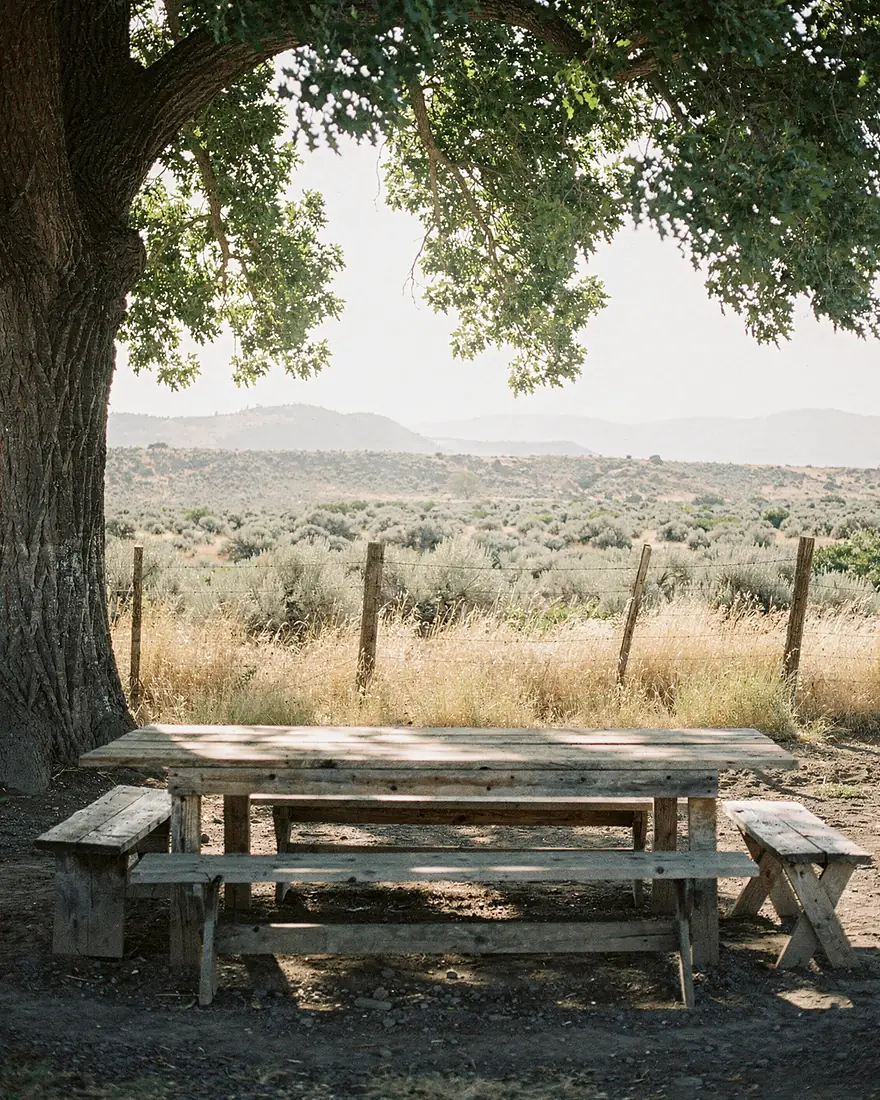
A long plank table and benches standing empty under an old cottonwood, sagebrush country beyond the fence line.

One helm, many hands.

A seat can carry a bill; it cannot convene a region. Mary founded Voices for the rest of it — the standing body that seats the West's stewards around cases a single office can only point at, and holds the record season after season. She controls it, leads it while she serves, and answers for it here.

This body reaches through its seats. Four tables a year, placed by role and by invitation, seat the operators, district managers, irrigation and conservation boards, port commissioners, tribal and county officials, outfitters and elders whose hands already work the systems, from the Cascade–Sierra front to the Continental Divide. The team behind a case is the region that holds it.

A named steward carries every case, with Michele Kiesz serving as Executive Director of our flagship case, the Columbia Basin Completion project. A retained bench works each one — researchers, organizers, legislative and media hands sized to the case — running the method of Intermountain, co-founder Taylor Canfield's firm, whose network this body shares and where the same work is carried commercially.

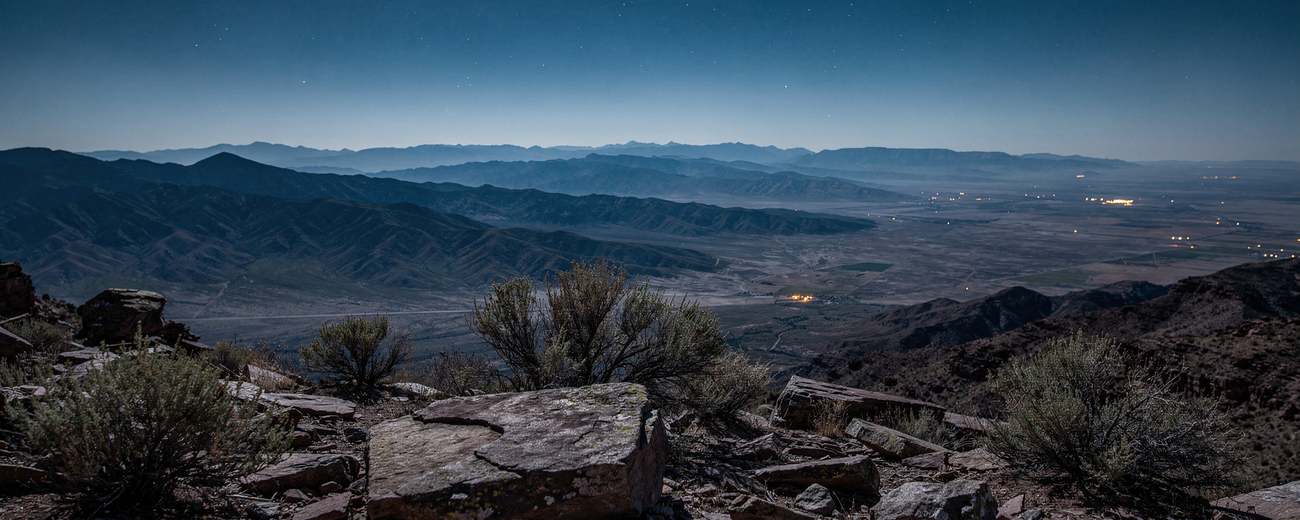
Basin-and-range country from height at the end of night, valley lights far below.
V Ways in
Open to anyone

Confluence Letter.

What moved in the region, once a month, the first Thursday. What passed, what stalled, what is worth watching in the next session or the next water year. Nothing owed, no seat required — this is the open door.

Subscribe

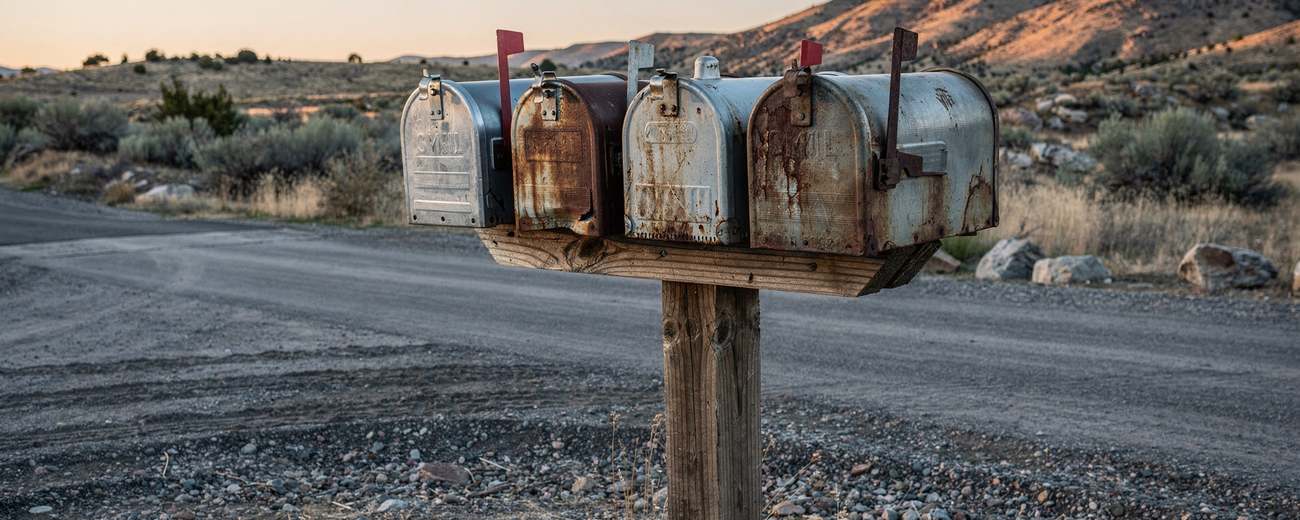
Weathered rural mailboxes on a cedar post at a gravel road junction at first light.
Resourced annually

Back the work.

Money buys the work, and the work shows up in the ground — a reach built, a budget line carried, a right settled. Contributions at any scale carry the same terms. Backing at founding scale starts with a conversation.

What it holds open is a body carrying live cases across the region, a record of who is committed to what, and a seat where your part of this country gets decided. The horizon is five and ten years, and the record is published either way.

Annual amount

Giving opens shortly. Leave your name and the link comes to you first. Contributions to Voices are not tax-deductible.

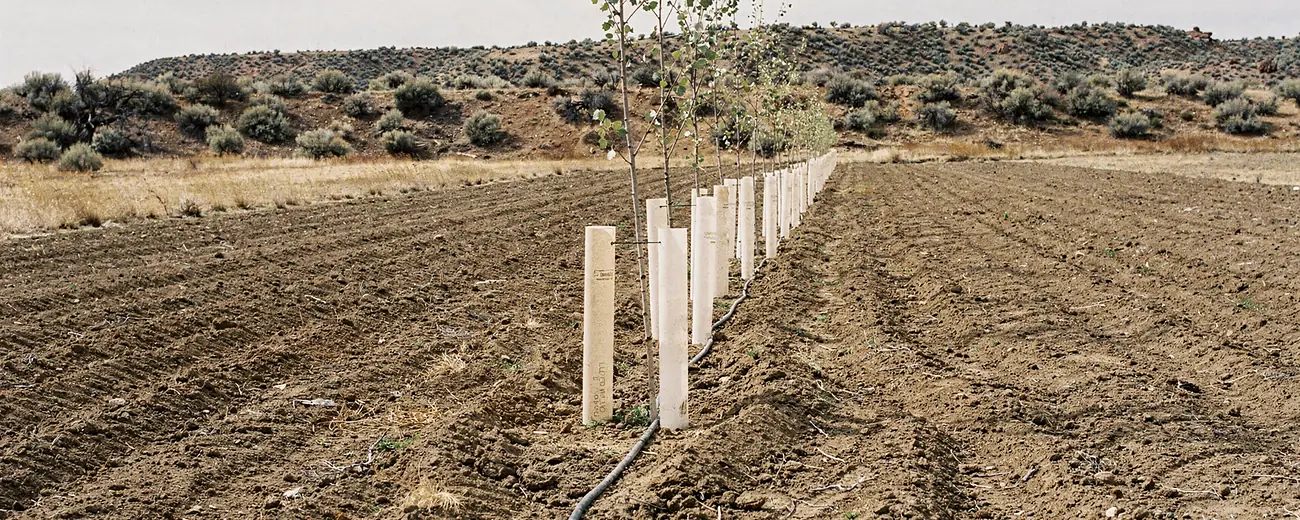
A newly planted windbreak of young poplars in tree tubes running out across worked ground.
How most cases start

Tell us what is stuck.

A canal, a transmission line, a water right, a land plan, a bill that dies every session, a project that answers to a position here and needs a body behind it. We take them one at a time, in public, and carry them until they stand.

Seats at the tables are placed by role, by invitation. If you steward something here and think your seat is at one of them, say so below.

What is stuck

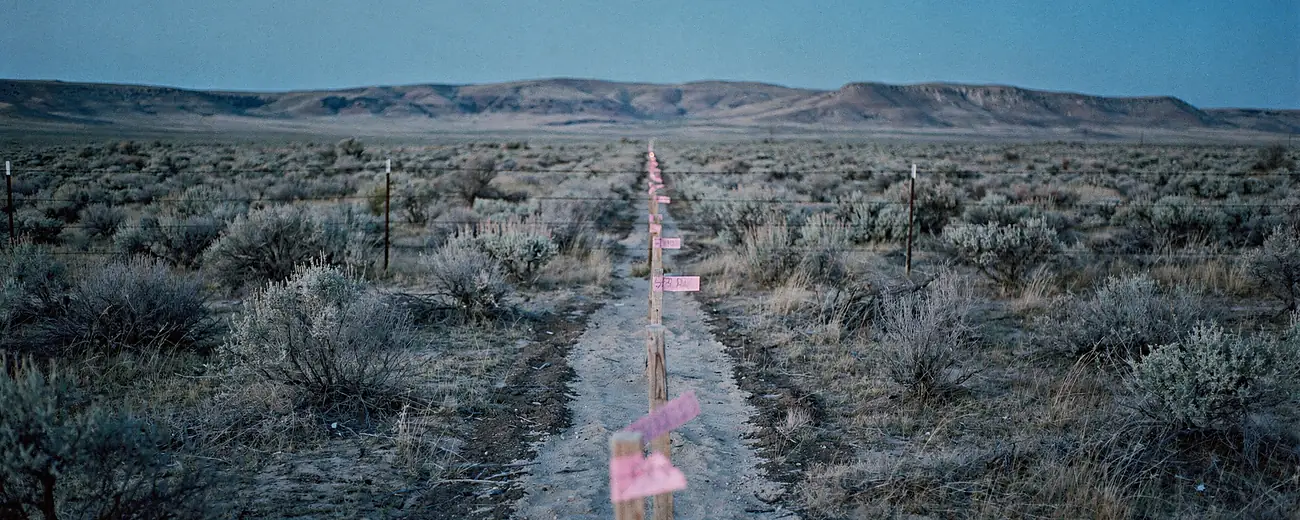
Survey stakes and flagging running a staked alignment across sagebrush at dusk, nothing built along it.